Why You Won't Act on Brain Health
The science behind why you won't act on dementia prevention—even when you know the facts—and a concrete plan to finally start.
Why You Won't Act on Brain Health
It's never too late for brain health.
But there's an optimal window most people miss.
Not because they don't know. Because they feel fine.
You know you should exercise. You know blood pressure matters. You know hearing loss affects the brain.
So why don't you act?
It's not laziness. It's not lack of information. It's not even disbelief that dementia can be prevented.
The science explains exactly what's blocking you.
The Timing Trap
Here's the "big miss" on timing of brain health:
Ages 40-65 is when prevention works best.
This is when your choices have the biggest impact. Managing blood pressure now. Treating hearing loss now. Staying active now. This is the golden window.
But ages 40-65 is also when you feel completely fine.
Your brain is silently changing. Pathology is starting. You can't feel any of it.
Meanwhile, dementia feels like something that happens to other people. In 20 or 30 years. Far away.
So you don't act.
Researchers call it the intention-behavior gap. You intend to do something. You don't do it.
Why? Even strong intentions predict only 30-40% of health behavior.
The missing piece is urgency.
You need two things for knowledge to become action:
- Certainty (yes, this matters)
- Urgency (I must act now)
A 50-year-old with perfect health has the certainty. They have zero urgency.
The Netherlands Study and Proof
Dutch researchers tested whether awareness alone could change behavior.
They ran a 10-month public health campaign. Mass media. Community outreach. Direct contact.
People who saw the campaign got the message. They became more aware. They reported higher motivation.
But at the population level? Awareness actually declined.
Only 20% of the public had even heard about it.
The conclusion: Awareness campaigns can't compete with daily life. And they can't create urgency in people who feel fine.
The Good News: It's Never Too Late
Here's what matters: Late action still works.
Start exercising at 70? You can still reduce dementia risk significantly - it is never too late.
Make lifestyle changes in your 60s or 70s? Studies show measurable improvement.
The pressure isn't "act now or it's too late."
The real message: Acting in midlife works better than waiting. But late action beats doing nothing.
The trap is the symptom-free midlife window. Not that it's impossible after 70.
It's Not Brain Games
Before you download a brain training app—stop.
That's the wrong category.
What the Science Says Prevents Dementia
The 2024 Lancet Commission found 14 lifestyle factors that could prevent 45% of dementia cases.
Midlife factors:
- Hearing loss (biggest single factor)
- High blood pressure
- High cholesterol
- Obesity
- Head injury
- Excessive alcohol
- Less education
Later-life factors:
- Smoking
- Depression
- Physical inactivity
- Social isolation
- Diabetes
- Air pollution
- Vision loss
What Actually Helps
When cognitive activity IS part of prevention, it looks different.
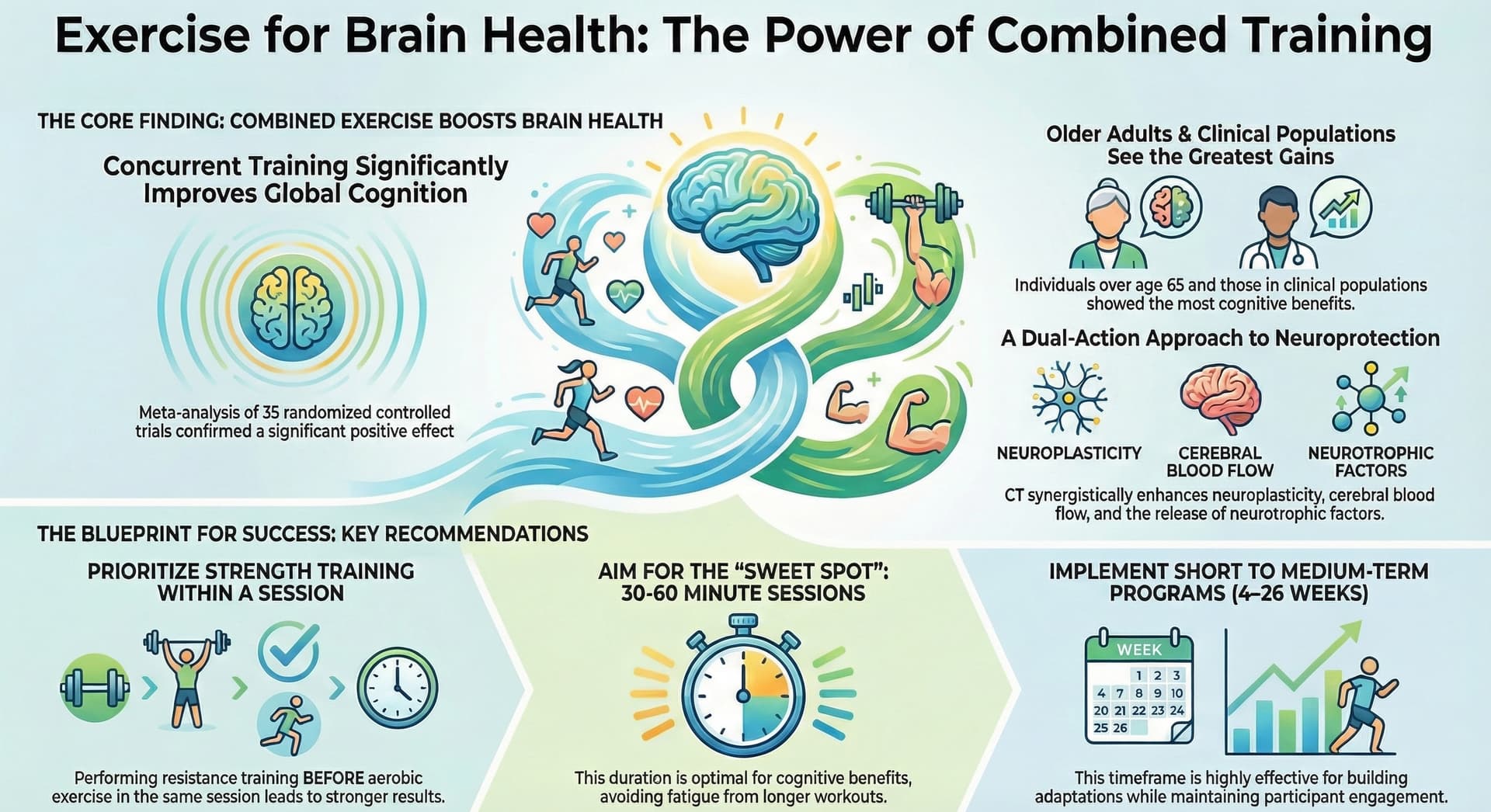
The FINGER study in Finland combined five elements:
- Diet
- Physical activity
- Cognitive stimulation
- Social activity
- Heart health monitoring
The cognitive piece wasn't a solo app. It was group activities. Learning. Discussion. Combined with the other four elements.
The results: Improved thinking ability. 60% lower disease risk. Lower healthcare costs.
Cognitive activity CAN be part of prevention. But it's only part of the picture. Not the whole solution.
A Plan, Not a Platitude
"Take care of your health" is not actionable.
Here's what is.
Step 1: Take a Risk Assessment
Two free online tools exist:
ANU-ADRI (Australian National University)
- 15 questions about your health and habits
- Takes 20 minutes
- Gives you a personal risk report
- Similar assessment
- Also free and online
- Takes about 20 minutes
Why this matters: You don't get generic advice. You get YOUR specific risk factors.
Then book a doctors visit to discuss your results.
Start here: Take ANU-ADRI or CogDRisk this weekend. Pick one factor. Make one specific plan.
That's not someday. That's now.
Keep exploring
Jim Kennedy, PhD
Researcher and writer dedicated to translating cognitive science into practical strategies for healthy aging.